
European policies on climate responsibility and environmental education
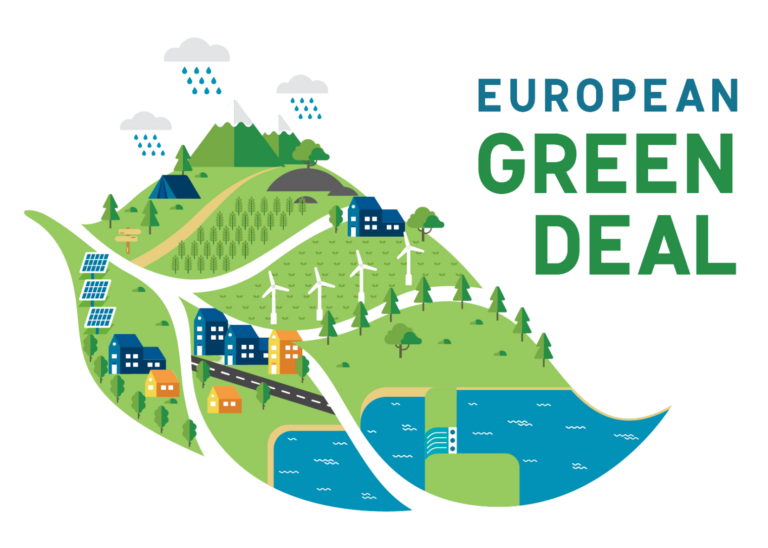
Europe has taken significant steps to address climate change through comprehensive policies and initiatives. The European Green Deal aims to transform the EU into a modern, resource-efficient economy with no net greenhouse gas emissions by 2050. The term “net zero greenhouse gas emissions” signifies the goal of reducing total greenhouse gas emissions to zero, meaning that the amount of greenhouse gasses emitted equals the amount that can be removed from the atmosphere or absorbed through various technologies or natural processes. This is a long-term objective to limit global temperature rise to below 2°C compared to pre-industrial levels, in line with the goals of the Paris Agreement.
Key objectives include cutting emissions by at least 55% by 2030 compared to 1990 levels, investing heavily in renewable energy sources like wind, solar, and hydroelectric power, supporting industries in adopting green technologies, and promoting a circular economy. These goals reflect Europe’s dedication to mitigating climate change and fostering a sustainable environment.
Furthermore, the Council of the European Union recently adopted the Law on the Restoration of Nature, which sets binding targets for the restoration of 20% of the EU’s land and sea areas by 2030, with the goal of restoring all ecosystems in need by 2050. Priority is given to Natura 2000 locations and degraded habitats to protect biodiversity and enhance resilience against climate change. Member states are mandated to integrate these targets into their national legislation, ensuring unified action across the continent.
Key points of the law include restoring dried peatlands, planting 3 billion trees, and releasing 25,000 km of rivers by 2030. It also emphasizes protecting pollinators and increasing biodiversity in agriculture, forests, and urban areas. These efforts are crucial in safeguarding Europe’s natural heritage and ensuring a sustainable future for generations to come.
Europe also places a strong emphasis on environmental education to raise awareness and empower individuals to make informed decisions that benefit the planet. This includes integrating environmental education into the school curriculum, community programs promoting environmental awareness through workshops and hands-on activities, and higher education and research focused on innovative solutions and sustainability practices. These educational efforts ensure a widespread understanding of environmental stewardship and empower individuals to make a positive impact.
Innovative approaches to environmental education, such as the “EcoQuest – Narrative Video Game on Climate Change” project, are crucial for engaging individuals, especially younger generations. This project educates about climate change and sustainability through an immersive and interactive experience, combining captivating storytelling and engaging gameplay with educational content.
By embracing creative educational tools, Europe continues to lead in environmental education and awareness, ensuring that individuals of all ages are motivated to contribute to a sustainable future.
By being informed and proactive, we can all contribute to preserving our planet!
More information:

Funded by the European Union. Views and opinions expressed are however those of the author(s) only and do not necessarily reflect those of the European Union or the European Education and Culture Executive Agency (EACEA). Neither the European Union nor EACEA can be held responsible for them. (Project code: 2023-3-SK02-KA210-YOU-000183253)