
5 reasons why you should use the EcoQuest video game to teach young people about EU participation for the environment
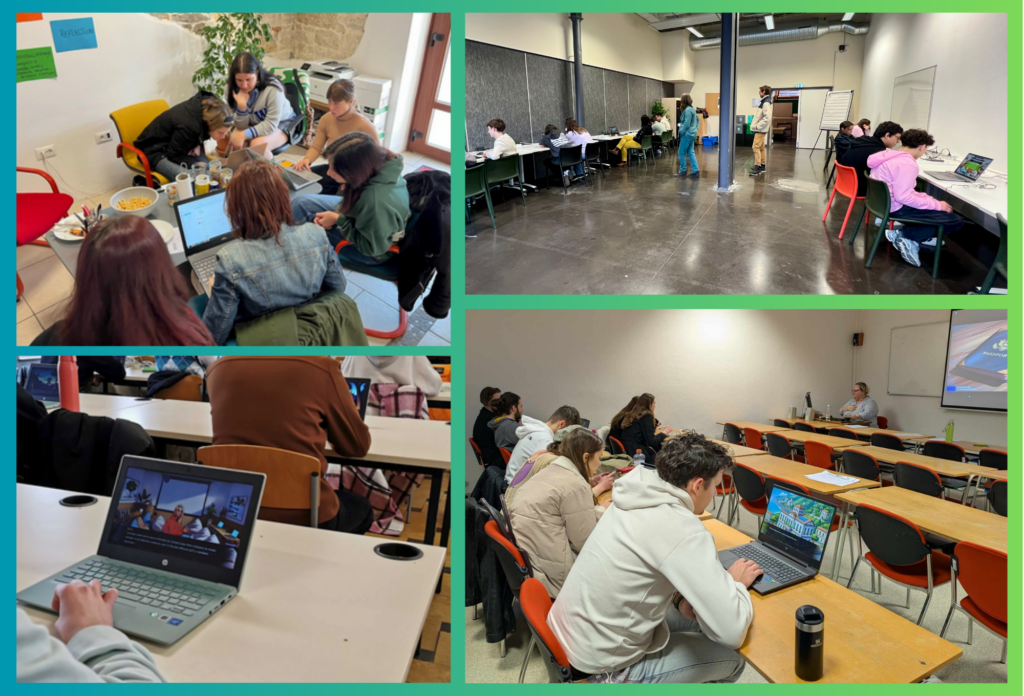
In the final stages of our EcoQuest project, the last step was to test the video game with our target groups to obtain their feedback and update the game. The project partners reached a total of 181 young people aged 15-25 and 19 educators and teachers. In this article, we share the key findings of these activities, in the form of the 5 reasons why you should use the EcoQuest game and project resources in your activities to teach young people about the environment and EU participation.
Reason 1: The power of storytelling
EcoQuest is a narrative video game designed to inspire young people aged 15-25 to explore avenues for participation and engagement. This single-player narrative game immerses players in an Erasmus+ youth exchange centred around climate action. Players interact with diverse characters, make impactful choices, and discover new ways to take action. By weaving a compelling narrative, the game fosters empathy and encourages players to think critically about their role in environmental conservation and EU initiatives.
Reason 2: A change of pace
Young people and educators alike have noted that EcoQuest offers a refreshing change from traditional educational methods. The game provides a new learning experience that contrasts with conventional classroom lectures. In addition, although it is a single-player game, educators have noticed that putting the participants into pairs to play the game spurred animated discussions about the story and ideas expressed to make a choice together.
Reason 3: Learning about EU opportunities for youth
One of the unique features of EcoQuest is that it combines educating about environmental action with the discovery of European opportunities. The game highlights programs such as Erasmus+, which offer youth exchanges, volunteering, and educational opportunities across Europe. By integrating these real-world initiatives into the game’s narrative, EcoQuest empowers young individuals to explore and pursue these opportunities, fostering a sense of European citizenship and active participation in EU projects.
Reason 4: Complementary resources for educators
In addition to the game itself, the EcoQuest project provides complementary resources designed to support educators in their teaching efforts. These resources include a pedagogical guide for educators to dive into the topic, as well as 8 practical activity sheets that align with the game’s themes and objectives. These resources allow educators to easily integrate EcoQuest into their programme, enhancing the learning experience and providing students with a comprehensive understanding of environmental issues and EU participation.
Reason 5: It’s free and easy to use!
The game and its accompanying resources are available free of charge. Moreover, the game is designed to be user-friendly, ensuring that both learners and educators can navigate it with ease. It has also been designed with accessibility in mind, in particular for learners with learning disorders, such as dyslexia, dyspraxia, etc. Finally, the activity sheets provide a good structure for practical educational activities following the game that educators can adapt to their own settings.
Discover our educational resources!

Funded by the European Union. Views and opinions expressed are however those of the author(s) only and do not necessarily reflect those of the European Union or the European Education and Culture Executive Agency (EACEA). Neither the European Union nor EACEA can be held responsible for them. (Project code: 2023-3-SK02-KA210-YOU-000183253)