
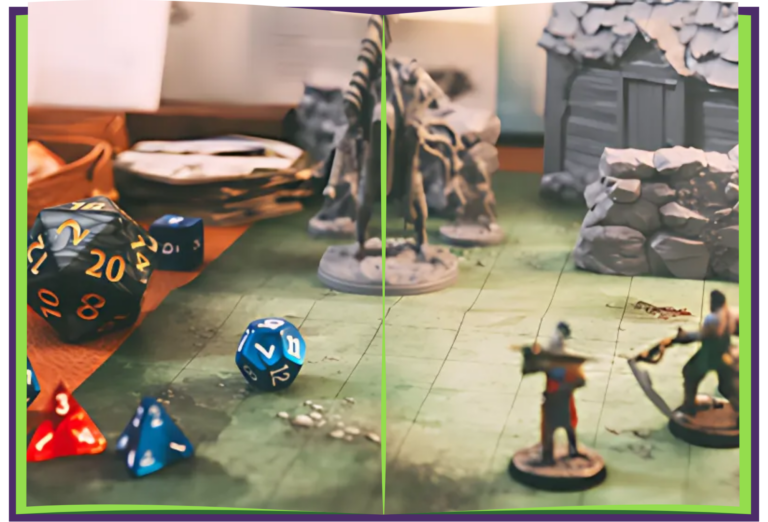
Image from Canva
The role of storytelling in shaping climate consciousness: a youth work perspective
Climate change can often seem distant and abstract, especially to young people. Yet, engaging them emotionally and intellectually is crucial for inspiring meaningful action. Storytelling, particularly through narrative video games, offers a dynamic approach by transforming complex global issues into personal and relatable experiences. Youth workers, as facilitators of growth and empowerment, can use this strategy to foster empathy, critical thinking and activism.
The power of narrative communication
Narrative communication is a psychological process that influences beliefs, attitudes, and behaviors. It has long-term persuasive effects by engaging the audience emotionally, making them more receptive to the message through immersion in the story, which fosters empathy with characters and situations.
In the context of climate change, video games can simulate the consequences of environmental decisions. For example, games like “Red Dead Redemption” (2010) or “Fate of the World” (2011) place players in decision-making roles, letting them experience the outcomes of their policies on global warming, biodiversity, and social equity. These experiences encourage players to think deeply about the impact of their choices, mirroring the complexities of real-world climate action.
Emotional engagement and empathy building
Narratives have a unique ability to elicit empathy by creating a connection between the audience and the story’s characters. In climate-related games, players often face moral dilemmas, such as choosing between economic growth and environmental protection. These scenarios evoke emotional responses that are crucial for fostering empathy and motivating climate action. Youth workers can use these games to initiate discussions about environmental justice, the ethics of sustainability or the role of individuals in collective action.
Youth work focuses on fostering critical reflection and personal development and narrative video games provide a valuable tool to explore complex issues in a safe, engaging environment, making abstract concepts more tangible. After gameplay, youth workers should facilitate discussions to help young people connect the narrative to real-life climate issues.
Balancing awareness with action
While narratives are effective in raising awareness, it is essential to balance this with actionable solutions. For long-lasting persuasive effects, narratives should highlight problems while offering pathways for change. Games can include positive outcomes that demonstrate successful environmental stewardship. Youth workers can reinforce this by emphasizing collective action and individual responsibility, framing challenges as opportunities for growth and innovation to mitigate feelings of helplessness and foster empowerment and resilience.
Conclusion
Storytelling through narrative video games presents an innovative and effective way to engage young people in climate education. By fostering empathy, critical thinking, and a sense of agency, these narratives align perfectly with the goals of youth work. If you´re curious about this topic and want to learn more you can start with our pedagogical guide where you´ll find more about narrative storytelling, video games, the topic of climate change and much more!
Bibliography
- Oschatz, C., & Marker, C. 2020. Long-term Persuasive Effects in Narrative Communication Research: A Meta-Analysis. Journal of Communication, 70(4), 473–496. https://academic.oup.com/joc/article/70/4/473/5880130
- Green, M.C., & Bilandzic, H. 2019. Narrative Effects. In B. Jennings & M. Greenberg (Eds.), Media Effects (4th ed.). Routledge. https://www.taylorfrancis.com/chapters/edit/10.4324/9780429491146-9/narrative-effects-melanie-green-helena-bilandzic-kaitlin-fitzgerald-elaine-paravati
- Luttrell, A. (Host). 2020. Persuasion via Story-Telling with Melanie Green. Opinion Science Podcast. https://opinionsciencepodcast.com/episode/persuasion-via-story-telling-with-melanie-green/

Funded by the European Union. Views and opinions expressed are however those of the author(s) only and do not necessarily reflect those of the European Union or the European Education and Culture Executive Agency (EACEA). Neither the European Union nor EACEA can be held responsible for them. (Project code: 2023-3-SK02-KA210-YOU-000183253)