Games for Environmental Education: Building on the EcoQuest Experience
In today’s world, where environmental challenges continue to intensify, the need for innovative approaches to environmental education has never been greater. Young people remain highly aware of climate change and sustainability issues, yet many still feel that their individual actions cannot significantly influence global environmental outcomes. The 2022 European Commission report “Education for Environmental Sustainability” highlights this challenge: while youth are deeply concerned about environmental crises, they often struggle to see how their personal engagement can lead to meaningful change.
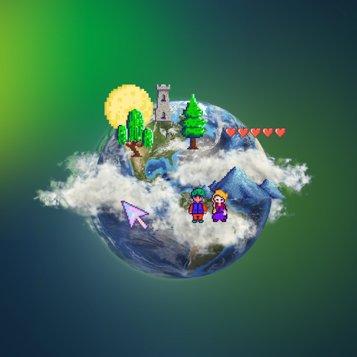
Recognising this gap, our new Erasmus +project EcoQuest 2 builds upon the foundations of the previous EcoQuest – Narrative Video Game on Climate Change Erasmus + project. While EcoQuest successfully demonstrated how narrative-driven games can inspire environmental awareness and engagement, this new phase takes the concept a step further by extending the learning experience beyond the digital world and into Live Action Role-Playing (LARP) activities focused on sustainability and environmental responsibility.
Digital games have proven to be powerful tools for learning. Their immersive environments allow players to experiment, make decisions, and experience the consequences of those decisions in ways that traditional educational methods cannot easily replicate. When applied to environmental education, games can transform abstract concepts, such as climate systems, sustainability policies, or ecological balance into tangible experiences that players can actively explore.
Accessibility and inclusivity remain central principles of the project. The game and accompanying learning materials will be designed to be intuitive and adaptable, ensuring that educators, trainers, and young learners from diverse backgrounds can easily integrate them into educational activities. In addition to the game itself, the project will include pedagogical resources and structured learning activities that support teachers in using the game as part of broader environmental education programs.
The project also continues to align with the European Union’s sustainability and education priorities. By connecting gameplay scenarios with key environmental themes and policy discussions, learners gain not only knowledge but also a deeper understanding of how environmental policies and civic engagement contribute to sustainable development.
Ultimately, this new project represents the next step in exploring how games can support environmental education. By building on the success and lessons of EcoQuest, it aims to further demonstrate how digital technologies can inspire young people to become active participants in shaping a more sustainable future. In addition to digital tools, the project also introduces LARP as an innovative learning method, allowing participants to experience environmental challenges through immersive, real-life scenarios and collaborative decision-making. Through LARP activities, learners will step into different roles and explore the complexities of sustainability in a dynamic and engaging way. Stay tuned and follow the project to find out more about the role of LARP!
Through engaging gameplay, meaningful narratives, and educational support materials, we hope to empower the next generation with both the knowledge and the confidence to believe that their actions matter and that they can play a vital role in protecting our planet.